How to say no in Japanese without sounding rude
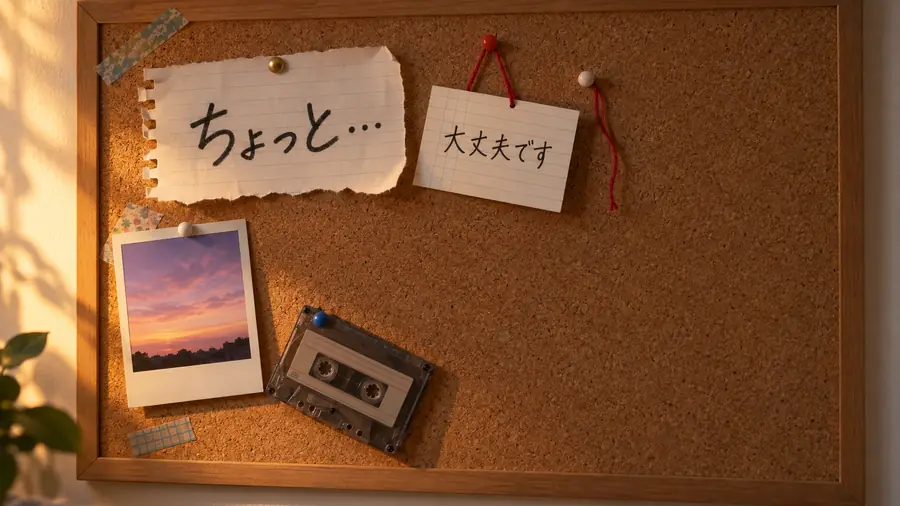
No in Japanese is いいえ (iie). But when someone invites you or offers you something, Japanese people almost never say it. They say ちょっと… (chotto…) and let the sentence trail off. Or they say 大丈夫です (daijōbu desu), “I’m fine”. This page gives you one line for each situation, with audio. It also shows you how to hear a no when nobody says the word.
The one line for each situation, at a glance
Seven situations, one line each. Tap one to jump to the examples with audio.
- いいえa yes/no question about a fact
- ごめん、今日はちょっと…a friend invites you
- その日はちょっと予定があって…a coworker invites you
- すみません、難しいですyour boss asks for something
- 大丈夫ですa clerk offers a bag or a card
- 結構ですsomeone keeps pushing
- また誘ってくださいyou want to be asked again
The words for no, and which one you actually need
Japanese has several words that translate as “no.” Each has a narrow job. The last two, 無理 and できない, are the ones friends use with each other. None of them is the line you use to turn a stranger or a boss down.
| Word | Sounds | Use it for |
|---|---|---|
| いいえ iie | polite, neutral | answering a yes/no question about a fact, waving off a compliment, replying to thanks |
| ううん uun | casual | the same jobs, with friends and family |
| いや iya | casual, “nah” | a quick no to a friend, or “well, actually…” |
| だめ dame | flat | “not allowed,” “that won’t work.” Rules, kids, close friends |
| 違う chigau | flat | “that’s wrong.” Correcting a fact |
| 無理 muri | casual, blunt | “no way,” “can’t.” Friends and family. ちょっと無理かも softens it |
| できない dekinai | plain | “I can’t.” Honest and clear with friends. At work, say 難しいです instead |
ColumnCasual yes and casual no sound alike
うん (un) is yes. ううん (uun) is no. The no is longer, and the voice dips in the middle. Listen to both.
うんun。 yes
Yeah.
ううんuun。 no
No.
Now test your ear. Four clips, each one is a yes or a no.
So is いいえ rude? No. It is polite. The problem is what it does. いいえ corrects. Say it to an invitation and it sounds like a door closing. For an invitation or an offer, you need the soft no below.
How a soft no is built
A soft no has three parts. A thank-you or a sorry. A reason you keep vague. A line that leaves the door open.
ありがとう。今日はちょっと…。また誘って。 That is the whole pattern. “Thanks. Today is a bit… Ask me again.”
The middle part is the trick. ちょっと means “a little,” and when you stop the sentence right after it, everyone hears the rest. The reason stays unsaid on purpose. 予定があって (I have something on) or 先約があって (I already have plans) is all the detail anyone expects. Nobody will ask what the plans are.
When you need to be clearer, say that it is difficult. 難しいです (muzukashii desu) sounds like “hard but possible”. After a request, it means no. If the person still does not take the hint, there are firmer lines. Think of them as a thermometer, and keep it as low as you can.
- いりませんirimasen“I don’t need it.” Firmest. Then walk away.
- 結構ですkekkō desu“No, thank you.” Polite and firm.
- 遠慮しますenryo shimasu“I’ll pass.”
- 難しいですmuzukashii desu“That’s difficult.” It means no.
- ちょっと…chotto…Softest. Leave it unfinished.
Why Japanese people rarely say no outright
In Japan, a flat no is more than a word. It puts the other person in the spot of being refused, right in front of you. A large part of Japanese politeness is about not doing that. So the speaker leaves the no unsaid, and the listener does the work of hearing it. Both sides know what happened, and nobody had to say it.
Two ideas sit behind this. One is 和 (wa), keeping the group at peace. The other is 空気を読む (kūki o yomu), “reading the air”: noticing what people mean without being told. A vague ちょっと… trusts you to read the air. Pushing past it is the rude part, not the soft no itself.
One learner in Tokyo asked whether a hotel could ship a suitcase to the airport. The reply was a two-minute speech about snow. The answer was no. それはちょっと… would have said the same thing in four syllables, and the long version was the polite one.
This does not mean Japanese people never say no. With friends and about plain facts, they say だめ and 違う all day. The soft no is for the moments when someone’s feelings are on the line. An invitation, a favor, an offer, or anyone you are being polite to.
Column本音 and 建前: what you think and what you say
本音 (honne) is what you really think. 建前 (tatemae) is what you say to keep things smooth. A soft no is tatemae, and everyone in the room knows it. It is not a lie. It is a shared way of being kind. Learners sometimes feel it is fake. Most Japanese people feel the opposite: saying the harsh thing out loud is what feels careless.
Pick your line: who is asking, and what for
Choose the person and the situation. You get one line with audio, a note on why it works, and its level: casual, polite, or formal.
ごめんgomen、今日kyōはwaちょっとchotto…。またmata誘ってsasotte!
Sorry, today’s not great… Ask me again!
Casual. The trailing ちょっと… is the no. また誘って keeps the door open.
ごめんgomen、それsoreはwaちょっとchotto無理muriかもkamo。
Sorry, that one’s probably not going to work.
ちょっと無理かも is “probably not doable.” Softer than 無理 on its own.
ううんuun、大丈夫daijōbu。ありがとうarigatō。
Nah, I’m good. Thanks.
ううん is the casual no. 大丈夫 means “I’m good.”
ありがとうございますarigatō gozaimasu。そのsono日hiはwaちょっとchotto予定yoteiがgaあってatte…。またmata誘ってsasotteくださいkudasai。
Thank you. I have something on that day… Please invite me again.
Thanks, a vague reason, and “invite me again.” You do not owe details.
すみませんsumimasen、そのsono日hiはwaちょっとchotto難しいmuzukashiiですdesu。
Sorry, that day is a bit difficult.
ちょっと難しいです means “I can’t.” Everyone hears it that way.
あa、大丈夫daijōbuですdesu。ありがとうございますarigatō gozaimasu。
Oh, I’m fine. Thank you.
The small あ makes it sound natural, not clipped.
申し訳ないmōshiwake naiのnoですdesuがga、そのsono日hiはwa都合tsugōがgaつかなくてtsukanakute…。またmataぜひzehiお願いしますonegai shimasu。
I’m sorry, I can’t make that day… I’d be glad to another time.
Humble opener, a reason you leave vague, and a warm close.
すみませんsumimasen、今日中kyōjūはwa難しいmuzukashiiですdesu。明日ashitaでもdemoよろしいyoroshiiでしょうdeshōかka。
I’m sorry, today is difficult. Would tomorrow be all right?
Say it is difficult, then offer another time. That is the whole move.
ありがとうございますarigatō gozaimasu。今日kyōはwa遠慮enryoしてshiteおきますokimasu。
Thank you. I’ll pass today.
遠慮しておきます is a clean, polite “I’ll pass.” Good for drinks and gifts.
今imaはwa見てmiteいるiruだけdakeなのでnanode。
I’m just looking right now.
For “come take a look.” A small smile and a hand wave help.
Clerkポイントカードpointo kādoはwaお持ちomochiですdesuかka?Youいえie、大丈夫daijōbuですdesu。
ClerkDo you have a point card?YouNo, I’m fine.
The いえ in front makes it clearly a no.
Clerk袋fukuro、いりますirimasuかka?You大丈夫daijōbuですdesu。
ClerkDo you need a bag?YouI’m fine, thanks.
The everyday no thanks. If they keep going, 結構です.
See all twelve lines in one table
| Situation | Line | Meaning | Level |
|---|---|---|---|
| A friend invites you | ごめん、今日はちょっと…。また誘って! | Sorry, today’s not great… Ask me again! | casual |
| A friend asks you for something | ごめん、それはちょっと無理かも。 | Sorry, that one’s probably not going to work. | casual |
| A friend offers you something | ううん、大丈夫。ありがとう。 | Nah, I’m good. Thanks. | casual |
| A coworker invites you | ありがとうございます。その日はちょっと予定があって…。また誘ってください。 | Thank you. I have something on that day… Please invite me again. | polite |
| A coworker asks you for something | すみません、その日はちょっと難しいです。 | Sorry, that day is a bit difficult. | polite |
| A coworker offers you something | あ、大丈夫です。ありがとうございます。 | Oh, I’m fine. Thank you. | polite |
| Your boss or teacher invites you | 申し訳ないのですが、その日は都合がつかなくて…。またぜひお願いします。 | I’m sorry, I can’t make that day… I’d be glad to another time. | formal |
| Your boss or teacher asks you for something | すみません、今日中は難しいです。明日でもよろしいでしょうか。 | I’m sorry, today is difficult. Would tomorrow be all right? | formal |
| Your boss or teacher offers you something | ありがとうございます。今日は遠慮しておきます。 | Thank you. I’ll pass today. | polite |
| A shop clerk or vendor invites you | 今は見ているだけなので。 | I’m just looking right now. | polite |
| A shop clerk or vendor asks you for something | ポイントカードはお持ちですか? いえ、大丈夫です。 | Clerk: Do you have a point card? You: No, I’m fine. | polite |
| A shop clerk or vendor offers you something | 袋、いりますか? 大丈夫です。 | Clerk: Do you need a bag? You: I’m fine, thanks. | polite |
Six situations, with audio
Two lines for each situation. The first is the one to learn. The tag on each line says how polite it is. Tap play to hear Kana say them.
1. Answering a yes/no question about a fact
This is where いいえ lives. Facts, compliments, thanks.
Someone日本人nihonjinですdesuかka?Youいいえiie、アメリカ人Amerikajinですdesu。
SomeoneAre you Japanese?YouNo, I’m American.
One more example
Someone日本語nihongo、上手jōzuですdesuねne。Youいえいえieie、まだまだmadamadaですdesu。
SomeoneYour Japanese is good.YouOh no, I still have a long way to go.
いえいえ is the standard way to wave off praise. It is not false modesty; it is just the reply.
2. A friend invites you
ごめんgomen、今日kyōはwaちょっとchotto…。またmata誘ってsasotte!
Sorry, today’s not great… Ask me again!
One more example
行きたいikitaiんnだdaけどkedo、今回konkaiはwa先約sen’yakuがgaあってatte。来週raishūならnara行けるikeruよyo。
I’d love to, but I already have plans this time. Next week works.
With a friend, ごめん is enough. No need for すみません.
3. A coworker invites you out
ありがとうございますarigatō gozaimasu。そのsono日hiはwaちょっとchotto予定yoteiがgaあってatte…。またmata誘ってsasotteくださいkudasai。
Thank you. I have something on that day… Please invite me again.
One more example
お誘いosasoiありがとうございますarigatō gozaimasu。今日kyōはwaちょっとchotto都合tsugōがga悪くてwarukute、すみませんsumimasen。
Thanks for the invitation. Today doesn’t work for me, sorry.
A vague plan is a normal reason. You do not owe anyone an excuse.
4. Your boss or teacher asks for something you can’t do
すみませんsumimasen、今日中kyōjūはwa難しいmuzukashiiですdesu。明日ashitaでもdemoよろしいyoroshiiでしょうdeshōかka。
I’m sorry, today is difficult. Would tomorrow be all right?
One more example
申し訳ないmōshiwake naiのnoですdesuがga、そのsono日hiはwa都合tsugōがgaつかなくてtsukanakute…。またmataぜひzehiお願いしますonegai shimasu。
I’m sorry, I can’t make that day… I’d be glad to another time.
Use すみません, never ごめん. A work request is not a party. Soft words still need a real alternative, like a time you can do it.
5. A clerk or a street vendor offers you something
Clerk袋fukuro、いりますirimasuかka?You大丈夫daijōbuですdesu。
ClerkDo you need a bag?YouI’m fine, thanks.
One more example
Clerkポイントカードpointo kādoはwaお持ちomochiですdesuかka?Youいえie、大丈夫daijōbuですdesu。
ClerkDo you have a point card?YouNo, I’m fine.
大丈夫です is the safest everyday no thanks. Add いえ in front when you want it unmistakable. If they keep going:
結構kekkōですdesu。
No, thank you.
One more example
いりませんirimasen。
I don’t need it.
結構です is polite and firm. いりません, “I don’t need it,” is firmer still. Save both for people who did not hear 大丈夫です.
6. Saying no so they invite you again
今日kyōはwa行けないikenaiけどkedo、ぜひzehiまたmata誘ってsasotte!
I can’t make it today, but please ask me again!
One more example
嬉しいureshiiですdesu。今回konkaiはwa難しくてmuzukashikute…。次回jikaiはwaぜひzehi。
I’d love to. This time is hard… Next time, for sure.
Show that you wanted to come, name “this time,” and ask to be invited again. また今度 on its own can sound like “maybe never.” Add また誘って or name a day, and it sounds like you mean it.
How to hear a no when nobody says it
The same soft forms will be used on you. Here is what they mean, so you stop waiting for a yes that is not coming. When you hear one, do not push. またの機会に (mata no kikai ni), “another time,” is the graceful reply.
ちょっとchotto…。
It’s a bit… (and nothing more)
A ちょっと that trails off after your invitation or request is a no. ちょっと待って (wait a sec) and ちょっといい? (got a second?) are not.
それsoreはwaちょっとchotto難しいmuzukashiiですdesuねne。
That would be a bit difficult.
“Difficult” means “can’t.” 厳しい (kibishii) does the same job.
考えてkangaeteおきますokimasu。
I’ll think about it.
“I’ll think about it.” At work, 検討します (kentō shimasu) is the same, and it usually means no.
またmata今度kondo。
Next time.
On its own, “next time” is often “no time.” With また誘って after it, it is real.
うーんūn…。
Hmm…
A long うーん before any words is the no arriving. Give them an easy way out.
Three more words that carry a no. 厳しい (kibishii), “tough,” works like 難しい. 微妙 (bimyō), “hmm, not great,” is a no about a plan or an idea. かもしれない or just かも, “maybe,” softens whatever comes before it: ちょっと難しいかもしれません is a no, not a maybe.
Mistakes that sound ruder than you mean
Each pair is a line learners say, and the line that works. None of the crossed-out ones is wrong Japanese. They are the wrong temperature.
Saying いいえ to an invitation
× いいえiie。
○ ありがとうarigatō。でもdemo、今日kyōはwaちょっとchotto…。
Thanks. But today’s a bit…
いいえ answers a question. An invitation is not a question; it is an offer, and offers get the soft no.
Saying 結構です to a friend
× 結構kekkōですdesu。
○ ううんuun、大丈夫daijōbu。
Nah, I’m good.
Polite forms are for distance. With a friend, distance reads as cold.
Saying だめ to an adult
× だめdameですdesu。
○ すみませんsumimasen、今日kyōはwa難しいmuzukashiiですdesu。
I’m sorry, today is difficult.
だめ is for rules and for people close to you. To a boss or a customer, it sounds like scolding.
Saying 嫌です when you mean “I’d rather not”
× 嫌iyaですdesu。
○ 遠慮enryoしてshiteおきますokimasu。
I’ll pass, thank you.
嫌です (iya desu) is “I hate it.” Strong. 遠慮しておきます is the polite pass you want.
Saying ちょっと when asked if you speak Japanese
× ちょっとchotto。
○ 少しsukoshiだけdake。まだmada勉強中benkyōchūですdesu。
Just a little. I’m still learning.
Here ちょっと means “a little, yes,” and the other person will start talking at full speed. Say “just a little, still learning,” and they will slow down.
Check yourself
Pick the line that fits. You will see right away whether it is right. Three questions to start; there are nine in total.
1. A coworker says, “Drinks on Friday?” You can’t go.
2. The clerk asks, “Do you need a bag?” You don’t.
3. You ask a favor. The reply is うーん、ちょっと難しいかも…. What do they mean?
4. A friend holds out their fries: “Want some?”
5. Your boss asks you to finish a report today. You can’t.
6. Someone asks, “Are you a student?” You’re not.
7. Which reply makes them invite you again?
8. A street vendor keeps going after you said 大丈夫です.
9. “Can you speak Japanese?” You know a little.
Reading these lines is the easy half. The hard half is the voice: the trailing ちょっと…, the small dip in ううん. Kana will invite you to karaoke. Turn her down without saying いいえ, and she tells you how it sounded.
Questions learners ask
Is 大丈夫です yes or no?
Both, and the situation decides. When someone offers you something, like a bag or a refill, 大丈夫です means “no thanks, I’m fine”. When someone asks if you are okay, it means “yes, I’m fine”. If you want your no to be clear, say いえ、大丈夫です.
What does 結構です mean?
Two things. “No, thank you” (firm and polite), and “that’s fine” or “that’s great” as in 結構ですね. The voice tells them apart. As a refusal, it is a notch colder than 大丈夫です, so use it on people who keep pushing, not on friends.
How do you say no in anime?
やだ (yada, “don’t wanna”), むり (muri, “no way”), だめ (dame), and いや (iya). All real, all casual. They are fine with close friends and family. Do not bring them to work or to a shop.
How do I say “no problem”?
大丈夫です again, or 全然大丈夫 (zenzen daijōbu) for “totally fine.” As a reply to thanks, どういたしまして (dō itashimashite) or just いえいえ.
How do you write no in hiragana?
いいえ. In speech it often shortens to いえ. The casual no is ううん.
Is it rude to say no to a Japanese person?
No. People say no to each other all day. What changes is the word, and the section above explains why. With friends and about facts, the direct words are normal. With invitations and favors, and with anyone you are being polite to, you use the soft no on this page. Do that, and nobody will think you are rude.
ColumnWhere this page comes from
The lines were written for this page and checked by a native speaker, who is also the author. The mistakes section comes from what learners report. Two Reddit threads shaped it: one on answering ちょっと to “do you speak Japanese?” and one on textbook lines like いいえ、けっこうです. The order of firmness follows how these replies land in Tokyo today, not a textbook ranking.
Keep going
- Japanese te-form: most polite requests and refusals are built on the te-form.