How to pronounce R in Japanese: one tap of the tongue, and why it sounds like l or d
The Japanese r (ら り る れ ろ) is one quick tap of the tongue tip behind your top teeth. English already has it: the dd in “ladder” said fast. Don’t curl your tongue (English r), and don’t hold it (l).
It is worth the effort. Learners on Reddit say a wrong r or ん stands out far more than pitch does.
The Japanese r at a glance
- The tapOne touch, like the dd in “ladder”
- Where the tongue goesTip on the ridge behind your top teeth
- Why it sounds like l or dA longer touch at the start, a lighter one between vowels
- The hard onesり, りょ, and ん before r
- Practice12 everyday words, with audio
1. The tap, step by step: where your tongue goes
When an American says “party” fast, Japanese listeners hear パーリー, with the Japanese r in the middle. A comment on Reddit pointed this out. So you already make this sound. You just make it in the middle of words. Start there.
- Say “ladder” fast, the American way. Don’t say each d clearly.
- Say it again and feel the dd. Your tongue tip flicks up once and drops.
- Now say only the start, “la-dda.” Then drop the “la.”
- What is left, a light “da” with that flick, is ら.
- Only the tip of your tongue moves.
- It touches the bumpy ridge just behind your top front teeth.
- It touches once, for an instant, and then drops.
- Your lips stay relaxed. They don’t round or push forward.
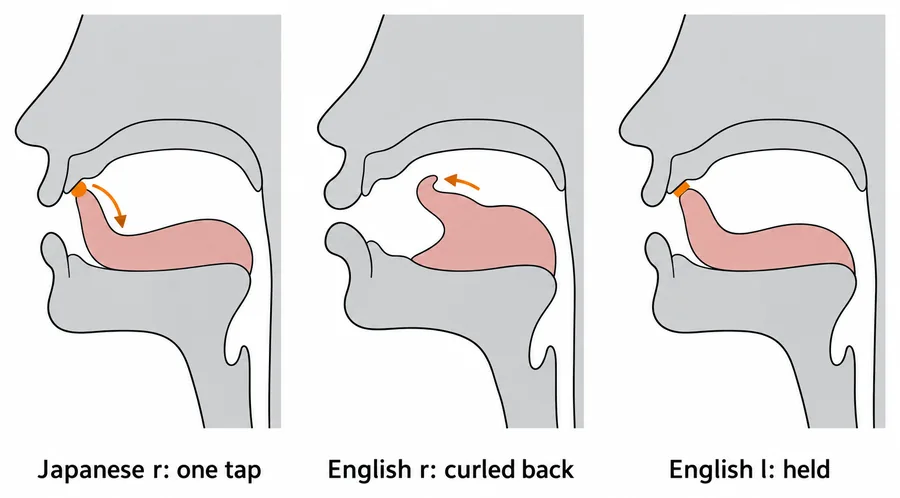
“Butter,” “water” and “city” work too, but only when the t is that same quick tap. A t that pops, or a t stopped in the throat, is not the model.
あらara、あらara、あらara
Say あら three times, with one light touch each time.
ara, ara, ara
らraりriるruれreろro
ra, ri, ru, re, ro
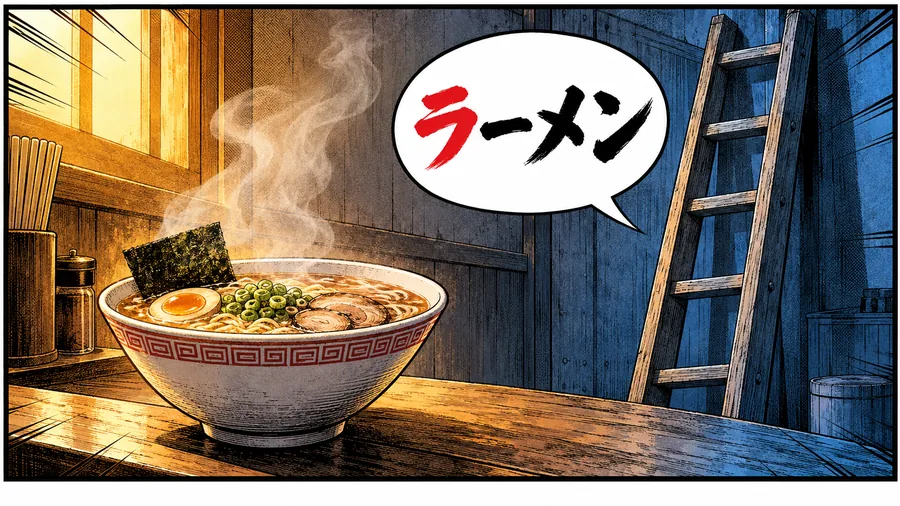
ラーメンrāmen
ら
ramen
りんごringo
り
apple
来るkuru
る
to come
それsore
れ
that
六roku
ろ
six
2. Why the Japanese r sounds like l or d
English sorts these sounds into r, l and d. The Japanese tap sits between l and d, so your ear files it under one or the other.
Which one you hear depends on where the tap falls. At the start of a word and after ん, the tongue touches a little longer. So the sound can land on l or on d in your ear. Between two vowels, the touch is the lightest.
楽raku
start of a word: a slightly longer touch
easy, comfortable
空sora
between vowels: the lightest touch
sky
Hear one more between vowels
車kuruma
car
After ん, your tongue is already near the ridge, so the tap gets squeezed. That one is in the next section.
Speakers also differ. Some let the sides of the tongue touch, which sounds more like l. One learner on Reddit asked why the r keeps hopping between two sounds. It shifts with the speaker and the speed, and all of these versions are fine.
Linguists write the tap as [ɾ]. The version that leans toward l is written [ɺ].
3. The hard ones
り
り feels the tightest. For い, your tongue is already high, so the tip has almost no room to flick. Keep the touch short, and don’t press the tongue flat. Drill it with “city” rather than “ladder.” In “city,” your tongue is already high too. Play りんご in section 1 again and listen for it.
りゃ, りゅ, りょ: one beat
Small ゃ ゅ ょ join the り in one beat. Tap and glide into the vowel in one move. Don’t say “ri-yo” in two parts.
Two words show it: りゆう (riyū) has three beats, and りゅう (ryū) has two.
理由riyū
3 beats: り ゆ う
reason
竜ryū
2 beats: りゅ う
dragon
Hear four more words with りょ
旅行ryokō
a trip
料理ryōri
cooking, a dish
両方ryōhō
both
旅館ryokan
a Japanese inn
旅行ryokō
Slow, one beat at a time. Then speed up.
a trip (slow, beat by beat)
ん before r
This is the one learners name most. One learner wrote that words with んりょ come out wrong in any natural sentence.
The problem is that ん leaves your tongue near the ridge. So the tap turns into a d, or it disappears. Hold ん for a full beat. Then lift the tip a little and flick it down once. It is n plus r, not n plus d plus r.
便利benri
3 beats: べ ん り
handy, convenient
遠慮enryo
3 beats: え ん りょ
holding back to be polite
Hear it slow, and one more
便利benri
handy (slow, beat by beat)
管理kanri
management
4. What not to do
Each pair shows the habit and the fix. The audio plays the fix.
Curling like the English r: “rrah-men”
× ラーメンrrah-men、くださいkudasai。
○ ラーメンrāmen、くださいkudasai。
Ramen, please.
The English r pulls the tongue back and rounds the lips. Keep the tongue forward and tap once.
Rolling like the Spanish rr: “arrrigato”
× ありがとうarrrigatō。
○ ありがとうarigatō。
Thank you.
A roll taps many times in a row. The Japanese r taps once. If you speak Spanish, the single r in “pero” is a good model, as a comment on Reddit notes. The rr in “perro” is not.
Holding like an l: “yolll-loshiku”
× よろしくyolll-loshikuお願いしますonegaishimasu。
○ よろしくyoroshikuお願いしますonegaishimasu。
Nice to meet you.
An l rests the tongue on the ridge while you keep voicing. The tap leaves right away.
Swapping in a full d: “wakadimasu”
× 分かりますwakadimasu。
○ 分かりますwakarimasu。
I understand.
A full d presses hard and stops the air. The tap is lighter, even when it sounds close to d.
Test your ear: r or d?
A pressed d is a different sound and can pick a different word. いろ (iro) is “color,” and いど (ido) is “a well.” A d presses and stops the air. The tap only brushes.
Ten clips. Which word do you hear?
5. Practice ra ri ru re ro: 12 everyday words
Each word is split into beats. The colored blocks are the taps. Play a word, say it back, then play it again.
A teacher in Japan hears hard English r sounds from people at N2 and even N1. They are understood, yet they sound foreign right away. A few minutes on words like these fixes that.
the tap (ら り る れ ろ)
ありがとうarigatō。
Thank you.
りんごringo
apple
ラーメンrāmen
ramen
料理ryōri
cooking, a dish
旅行ryokō
a trip
来年rainen
next year
作るtsukuru
to make
分かるwakaru
to understand
冷蔵庫reizōko
fridge
連絡renraku
getting in touch
彼kare
he, him
失礼shitsureiしますshimasu。
Excuse me. (as you come in or leave)
Check yourself without a teacher
Record yourself saying a word from this page. Play the native clip and your recording back to back, and again the next day.
Listen for two things. A curl means it is too much like the English r. A tongue that stays on the ridge and hums is too much like l.
Speech-to-text gives a rough check. Say いろ (iro). If it comes back as 井戸 (ido, a well), your touch is too much like d. A correct result does not prove a correct sound, though. The app guesses the word you meant. Kana, below the quiz, listens for the tap inside a whole sentence.
Check yourself
Nine questions. Three are audio clips: listen, then pick. Three questions to start.
1. Listen. How many beats are in the first word?
Play the clip
2. Which English word has the same tongue move as ら?
3. Where does your tongue tip touch?
4. Listen. Which word do you hear?
Play the clip
5. Your り sounds like “lee,” with your tongue pressed flat. What helps?
6. A friend says, “Just say d.” What happens to いろ (iro, color)?
7. Listen. Which word do you hear?
Play the clip
8. Which one is NOT a Japanese r?
9. Where is the tap the lightest?
Questions learners ask
Is the Japanese r an l?
No. Some guides tell you to say an l. That stops the English curl, but an l holds the tongue too long. Japanese ears still hear an accent. Aim for the single tap.
Is the Japanese r rolled?
No. A roll taps several times. The Japanese r taps once. You may hear a rolled r from tough guys in movies and anime. That is a style, and you don’t need it.
Why do Japanese speakers say l as r?
Japanese has one sound, the tap, where English has two. So l and r both land on the tap. That makes “light” and “right” hard to tell apart. One Reddit comment puts it plainly: you can be fluent in English and still never get R and L right. It is the same one-sound-versus-two problem as yours, in reverse.
Should I just say d?
Not a full d. Between vowels, a quick d like the one in “ladder” is close. A firm d is a different Japanese sound, and it can change the word. See the ear test.
How do I pronounce “ri”?
Tap once, then let the tongue drop into い. Your tongue is already high, so keep the touch light. Start inside a word, like ありがとう (arigatō).
What is the IPA symbol for the Japanese r?
It is [ɾ], the tap. Some speakers make a version that leans toward l, written [ɺ].
ColumnWhere this page comes from
The example words were chosen for this page. The learner stories come from Reddit posts in r/LearnJapanese and r/japanlife, linked where they appear. We also asked three AI models how to make this sound and kept the points they agreed on.
If the r takes you a while, that is normal. Even Japanese children get ら り る れ ろ last, as one Reddit comment notes.
The tongue position follows the pronunciation module of the Tokyo University of Foreign Studies. See its page on the r sound.
Keep going
- Japanese pronunciation: the r is one of five habits. The others are beats, っ, vowels and です.
- The small っ (small tsu): the other sound English ears skip: a silent beat you hold.
- Japanese te-form: verbs that end in る, like 作る and 分かる, lose the tap in 作って and 分かって.